

Solar in Mullumbimby
Solar options tailored to Mullumbimby's hinterland properties.
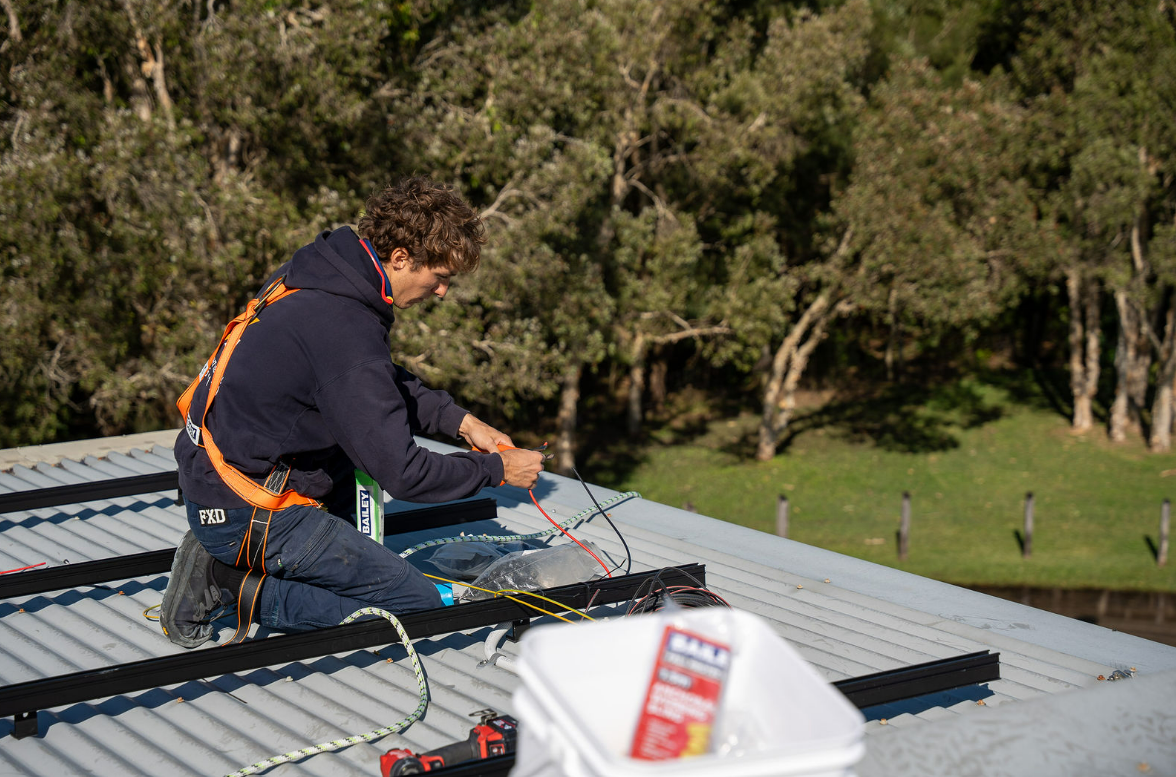
Powering Mullumbimby Properties with Solar
Local Light Electrical installs solar systems for properties throughout Mullumbimby, from town-centre homes to larger acreage blocks in the surrounding hinterland. Solar Mullumbimby has become a regular consideration for property owners in the area, and every project starts with a site assessment covering roof orientation, tree cover and the property's existing electrical capacity.
From there, our team works through system design, equipment selection and installation, followed by switchboard connection and the required compliance checks. Panel and inverter choices are matched to the property type, whether that's a compact town block, a rural property with multiple structures, or a small commercial site.
Mullumbimby's hinterland setting brings its own considerations, including surrounding tree cover and varied terrain, both of which factor into system placement and design. For a consultation on solar options for your Mullumbimby property, call Local Light Electrical on 0435 711 180.
What Sets Us Apart
At Local Light Electrical, we manage every solar project in Mullumbimby with clear communication and careful planning. Here's what our clients can expect:
- We assess tree cover and shading carefully, given how common this is across Mullumbimby's hinterland properties
- Our work spans compact town blocks, rural acreage and small commercial sites throughout the area
- System design takes into account each property's terrain, structures and existing electrical setup
- We provide clear explanations at every stage, from initial site visit through to final connection
- Every installation includes the compliance checks and safety standards required for solar work in NSW
- Equipment is selected to suit inland conditions, including temperature variation across the seasons
- Our team is familiar with Mullumbimby's mix of established homes, newer builds and rural properties
Get in touch to discuss what solar could look like for your Mullumbimby property
Hinterland Experience
Licensed Electricians
Local Team
Get a Quote in Mullumbimby
Enter your details and we'll get back to you as soon as possible.
Thank you for contacting Local Light Electrical.
We will get back to you as soon as possible.
Oops, there was an error sending your message.
Please try again later.
Frequently Asked Questions
How does tree cover affect solar panel placement on a property?
Tree cover is a common consideration in hinterland areas like Mullumbimby, where established trees can cast shade over parts of a roof at different times of day. Even partial shading on a section of panels can affect the output of an entire panel string, depending on how the system is wired.
Panel placement is generally planned around known shading patterns, though tree growth over time can change these patterns. Some system designs use technology that reduces the impact of partial shading on overall performance. A site assessment usually identifies whether tree cover will influence panel placement on a given property.
How does temperature variation affect solar system performance in hinterland areas?
Inland areas can experience wider temperature swings between day and night, and across seasons, compared to coastal locations. Solar panels can lose a small amount of efficiency in very high temperatures, though this varies depending on the panel type and installation.
Cooler months generally don't reduce output significantly, provided there's adequate sunlight. Ventilation behind panels can help manage heat build-up, which is sometimes factored into installation design. These considerations are generally minor compared to the impact of shading and panel orientation.
What should property owners consider when choosing a solar system size for a larger property?
Larger properties, including those with acreage, often have higher or more variable energy needs depending on how the land and buildings are used. Factors like the number of occupied structures, any equipment or machinery on site, and future plans for the property can all influence system sizing. Reviewing historical energy usage, where available, helps establish a baseline for what a system needs to support.
Properties with room for a larger system may also have more flexibility if energy needs increase over time. A tailored assessment is generally the most reliable way to determine appropriate sizing for a larger property.



